
Research Projects
I am a vertebrate paleontologist and Ph.D. candidate at the University of Florida whose research integrates museum collections, morphology, paleobiology, and evolutionary history to investigate patterns of mammalian diversity and adaptation through the Cenozoic. My work focuses on fossil mammals and the use of quantitative approaches, including geometric morphometrics, Bayesian phylogenetics, and AI to address questions in evolution, ecology, and functional morphology. In parallel, I develop and coordinate programs that connect scientists, educators, students, and communities through authentic STEM experiences — expanding access to Earth and environmental sciences across Florida.
Fossil Horse Macroevolution
Investigating macroevolutionary transitions in Neogene Equidae using phenomics and machine learning
Fossil horses (Family Equidae) provide one of the most complete records of mammalian evolution in the fossil record, spanning over 55 million years in North America. My dissertation research focuses on macroevolutionary transitions in Neogene fossil horses, leveraging phenomics — the large-scale, quantitative measurement of phenotypic variation — alongside machine learning to detect patterns of evolutionary change across time and space. By integrating museum collections from across North America with computational approaches, I aim to reveal how populations of fossil horses changed morphologically across major climatic and environmental transitions.
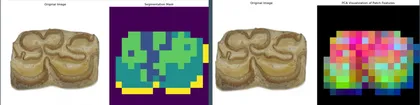
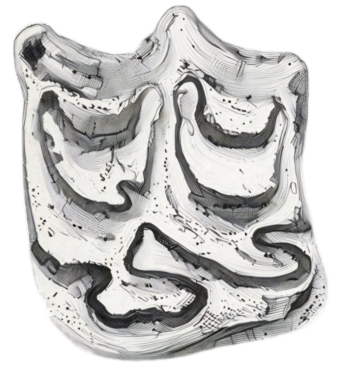
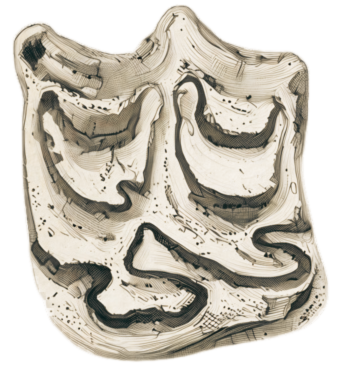
A central component of this work involves applying interpretable deep learning models to images of fossil horse teeth, which preserve detailed morphological information about diet, ecology, and phylogenetic relationships. This approach allows me to quantify subtle variation across large sample sizes that would be impractical to measure manually, opening new windows into paleopopulation structure and evolutionary dynamics. This work was recognized with a Romer Prize Session presentation at the 2026 Society of Vertebrate Paleontology meeting.
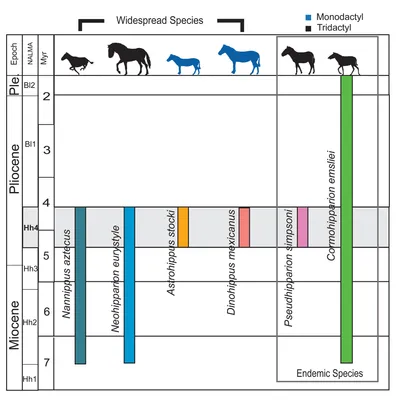
I also investigate species occurrence patterns of Late Miocene horses from Florida, examining whether gaps in the fossil record reflect genuine ecological absences, sampling biases, or both — an important methodological question for interpreting evolutionary and biogeographic patterns from museum collections.
Publications

Species Occurrences of Late Miocene Horses (Equidae) from Florida: Sampling, Ecology, or Both?
AI and paleontology: Effects of vertebrate fossils sample size on machine learning image classification
Early Miocene land mammals and chronology of the Belgrade Formation, eastern North Carolina
Acknowledgements
This research was supported by: